AI Is Already Replacing Entry-Level IT Jobs in Bangladesh. Here's What That Means for You.
A Dhaka BPO firm cut a 55-person team down to 10 almost overnight when AI took over routine invoice processing. It's an early, well-documented signal of what happens to entry-level tech work in Bangladesh, and what skills actually hold up against it.
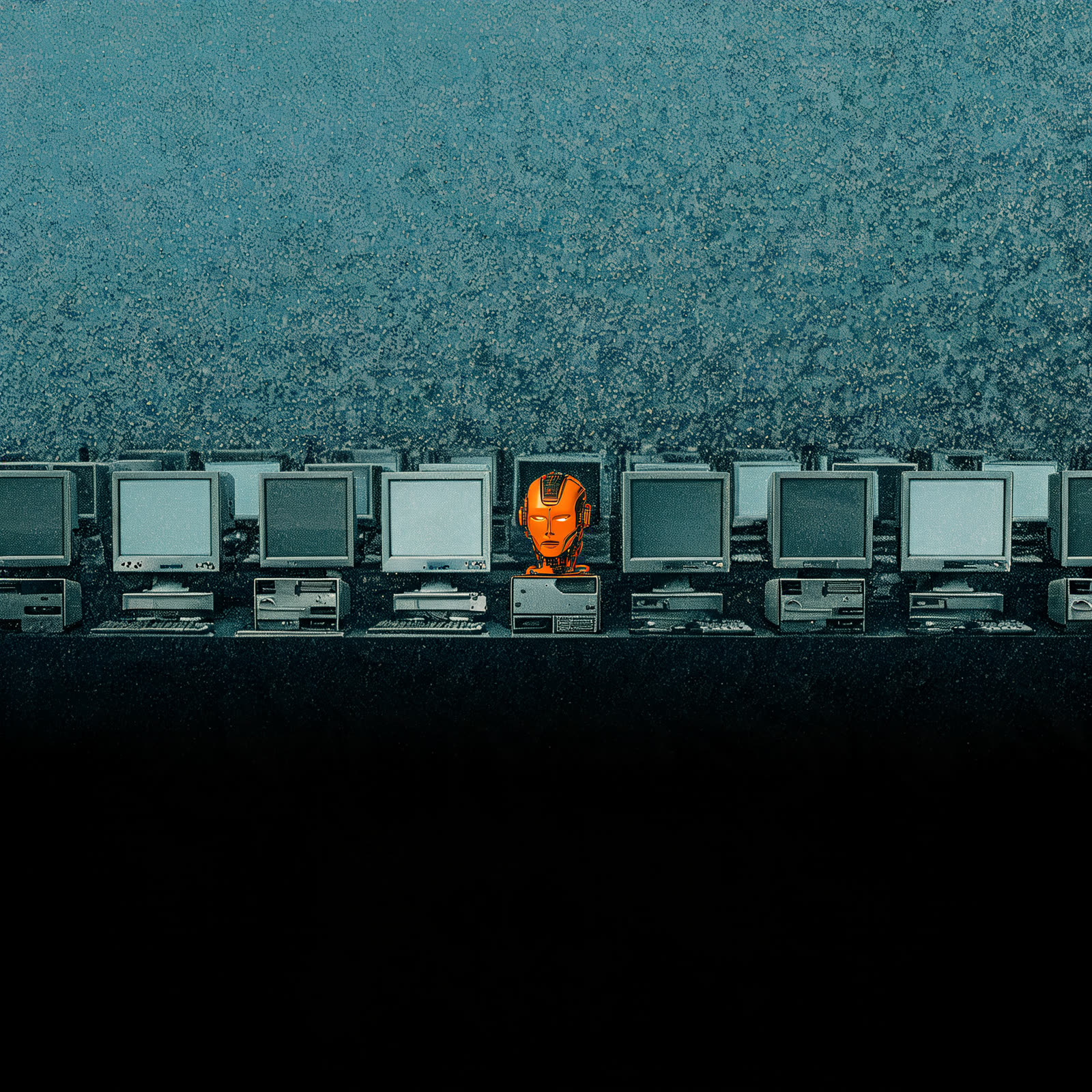
In 2024, a Dhaka BPO firm watched artificial intelligence cut a 55-person invoice processing team down to 10 almost overnight. It was an early, well-documented signal for Bangladesh's entry-level tech workforce: the routine, repeatable tasks that used to be a way into the industry are the first ones AI is now doing instead.
What actually happened to entry-level IT jobs in Bangladesh?
The story comes from SkyTech Solutions, a Dhaka-based business process outsourcing (BPO) company. For years, one of its steady contracts was processing Uber Freight invoices and loading the data into a customer relationship management system, the kind of task that once supported over 50 jobs. Late last year, the client informed SkyTech that AI automation would handle the bulk of the work, leaving only quality control for humans. The team dropped from 55 people to 10.
Founder Musnad E Ahmed wasn't describing a one-off. He said AI had eliminated roughly 30 percent of entry-level jobs across his own growing company in the past year and a half, even as headcount elsewhere in the business climbed past 700. The pattern showed up across Bangladesh's wider BPO and IT-enabled services sector: data entry, scripted customer support, and basic image editing all became easier to automate than to outsource.
Why are entry-level roles the first to disappear?
The jobs going first share one trait: they are routine and repeatable. A pizza chain can now let AI take a full phone order. A photo studio can run 40,000 images through automated editing with the same headcount that used to manage 25,000. A password reset, a balance transfer status check, a basic support script, these are exactly the tasks AI systems handle well, and they are exactly the tasks that used to be someone's first job in tech.
There is a language buffer for now. Industry leaders have pointed out that AI's fluency in Bangla still trails its fluency in English, so Bangla-language support work has held up better than English-language work. Nobody in the industry expects that gap to last. It buys time, not safety.
What does this mean for Bangladesh's next generation of tech talent?
The more useful reading of this shift isn't "AI is taking every job." One studio owner in the industry put it plainly: with the same team, AI let him process far more work than before, so AI expanded what his people could do rather than replacing all of them. The split that matters is between work that only executes instructions and work that directs AI to get something done. The first kind is shrinking. The second kind is where the actual demand is going.
That is the gap BIAI (Bangladesh Institute of Artificial Intelligence) was built to close. It is the country's first applied AI institute, built build-first and portfolio-driven rather than theory-first: you learn by shipping real, working AI builds, not by sitting through slides about what AI can theoretically do. The curriculum comes from Outskill, a global AI upskilling partner with over 10 million learners across 45+ countries and mentors from Google, Microsoft, Amazon, Meta, and OpenAI, brought to Bangladesh backed by the same builder who took on the country's ceramics industry in 1998 and is now taking on this one.
So is this the end of tech jobs in Bangladesh?
No, but it is the end of a certain kind of entry point. The old path, where you got hired to do something repetitive and slowly worked your way up, is closing as AI absorbs the repetitive part. The path that is opening is narrower to enter but far more durable: people who can build with AI, not just describe it, direct it, not just wait for it to take their job. That is a skill you build by actually building something, and it is available to anyone willing to start now, not later.